Lansing Boys Vocational School: Difference between revisions
Evilavatar (talk | contribs) Created page with 'Also known as the Industrial school for boys this facility opened in 1856 and severed a home, skilled trades training, and educational facility for boys until sometime in the lat…' |
Updated info |
||
| (6 intermediate revisions by 3 users not shown) | |||
| Line 1: | Line 1: | ||
{{infobox institution | |||
| name = Lansing Boys Vocational School | |||
| image = MIlansing.png | |||
| image_size = | |||
| alt = | |||
| caption = | |||
| established = 1855 | |||
| construction_began = | |||
| construction_ended = | |||
| opened = 1856 | |||
| closed = 1972 | |||
| demolished = | |||
| current_status = [[Demolished Institution|Demolished]] | |||
| building_style = [[Cottage Planned Institutions|Cottage Plan]] | |||
| architect(s) = | |||
| location = Lansing, MI | |||
| architecture_style = | |||
| peak_patient_population = | |||
| alternate_names = <br> | |||
*Industrial School for Boys at Lansing | |||
*Michigan Reform School | |||
}} | |||
==History== | |||
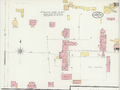
Michigan's Legislature appropriated money to build a "house of correction for juvenile offenders" in 1855 and passed an act establishing the Michigan State Reform School. Lansing citizens donated 30 acres of land about a mile from the Capitol, which was supplemented by 195 acres purchased by the state. The institution was built on North Pennsylvania Avenue and called the Industrial School for Boys. | |||
The first student was enrolled Sept. 2, 1856. Enrollment a year later totaled 54 boys and 8 girls. After the 8th girl, it was decided to exclude young women for "obvious reasons." Originally the boys did farm labor in addition to their class work. Gradually the curriculum was changed to vocational guidance courses with classes in baking, hand weaving, shoe making, printing, carpentry, painting and other trades. | |||
By 1917, the school population had risen to 800, thanks in part to the decision to take in orphans and giving them a place to live. In the 1920's the school grounds included a barber, bowling alley, cobbler shop, fieldhouse, hospital, power plant, and tailor shop. They also had a 35-piece band that became popular throughout the state, but was dissolved when the depression hit. In 1964, the population had been cut in half – only 400 boys were now enrolled. | |||
It carried on for a few more years, then in the summer of 1972, Governor Milliken announced its closing, citing it as being inadequate for the boys of the 1970s. After closing in January 1973, the remaining boys were shipped to Whitmore Lake and Adrian. Almost all the buildings were torn down, all except for the fieldhouse, which is the only school building still standing. Chunks of land were sold and the site now contains a subdivision, Eastern High, and Lansing Catholic High. | |||
==Images== | |||
<gallery> | |||
File:MIlansingschl1970s.png | |||
File:MIlansingschlPC.png | |||
File:MIlansingschlPC1.png | |||
File:MIlansingschlPC2.png | |||
File:MIlansingschl1898.png| '''1898''' | |||
File:MIlansingschl1906.png| '''1906''' | |||
File:MIlansingschl1926.png|'''1926''' | |||
File:MIlansingschl1953.png| '''1953''' | |||
</gallery> | |||
[[Category:Michigan]] | |||
[[Category:Cottage Plan]] | |||
[[Category:Demolished Institution]] | |||
Latest revision as of 02:00, 10 April 2026
| Lansing Boys Vocational School | |
|---|---|
 | |
| Established | 1855 |
| Opened | 1856 |
| Closed | 1972 |
| Current Status | Demolished |
| Building Style | Cottage Plan |
| Location | Lansing, MI |
| Alternate Names |
|
History
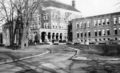
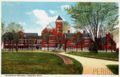
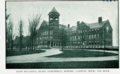
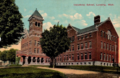
Michigan's Legislature appropriated money to build a "house of correction for juvenile offenders" in 1855 and passed an act establishing the Michigan State Reform School. Lansing citizens donated 30 acres of land about a mile from the Capitol, which was supplemented by 195 acres purchased by the state. The institution was built on North Pennsylvania Avenue and called the Industrial School for Boys.
The first student was enrolled Sept. 2, 1856. Enrollment a year later totaled 54 boys and 8 girls. After the 8th girl, it was decided to exclude young women for "obvious reasons." Originally the boys did farm labor in addition to their class work. Gradually the curriculum was changed to vocational guidance courses with classes in baking, hand weaving, shoe making, printing, carpentry, painting and other trades.
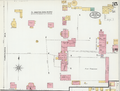
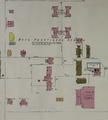
By 1917, the school population had risen to 800, thanks in part to the decision to take in orphans and giving them a place to live. In the 1920's the school grounds included a barber, bowling alley, cobbler shop, fieldhouse, hospital, power plant, and tailor shop. They also had a 35-piece band that became popular throughout the state, but was dissolved when the depression hit. In 1964, the population had been cut in half – only 400 boys were now enrolled.
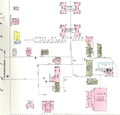
It carried on for a few more years, then in the summer of 1972, Governor Milliken announced its closing, citing it as being inadequate for the boys of the 1970s. After closing in January 1973, the remaining boys were shipped to Whitmore Lake and Adrian. Almost all the buildings were torn down, all except for the fieldhouse, which is the only school building still standing. Chunks of land were sold and the site now contains a subdivision, Eastern High, and Lansing Catholic High.
Images
-
-
-
-
-
 1898
1898 -
 1906
1906 -
 1926
1926 -
 1953
1953


