Halifax County Regional Rehabilitation Centre: Difference between revisions
m updated info |
m added images |
||
| Line 1: | Line 1: | ||
{{infobox institution | {{infobox institution | ||
| name = Halifax County Regional Rehabilitation Centre | | name = Halifax County Regional Rehabilitation Centre | ||
| image = | | image = halifaxhosp1.jpg | ||
| image_size = 250px | | image_size = 250px | ||
| alt = | | alt = | ||
| Line 38: | Line 38: | ||
<gallery> | <gallery> | ||
File:halifaxhosp2.jpg | |||
File:chr3.PNG|Main Building | File:chr3.PNG|Main Building | ||
file:chr4.PNG | file:chr4.PNG | ||
| Line 44: | Line 44: | ||
file:Capture3.PNG | file:Capture3.PNG | ||
file:chr6.PNG | file:chr6.PNG | ||
File:halifaxhosp3.jpg | |||
</gallery> | </gallery> | ||
[[Category:Nova Scotia]] | [[Category:Nova Scotia]] | ||
[[Category:Demolished Institution]] | [[Category:Demolished Institution]] | ||
Latest revision as of 21:24, 31 May 2026
| Halifax County Regional Rehabilitation Centre | |
|---|---|
 | |
| Opened | 1887 |
| Closed | 2002 |
| Demolished | 2011 |
| Current Status | Demolished |
| Location | Cole Harbour, NS |
| Alternate Names |
|
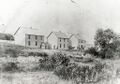
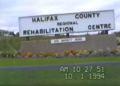
The Halifax County Regional Rehabilitation Centre originally started out as the County Poor Home (or sometimes referred to as Poors' Home) in 1887, adjacent to Bisset Lake in Cole Harbour, Nova Scotia. Throughout its one hundred year history, the site changed its role from supporting homeless and poor citizens, to becoming a psychiatric hospital.
History
In 1887, Halifax County created a home for poor and homeless individuals on a farm near Bisset Lake in Cole Harbour, Nova Scotia. The site mainly served as a working farm for those who could not find work or shelter. In 1929 the houses which held the residents caught fire and burnt down, displacing the residents throughout the city of Halifax. The dormitories had been described as “a rambling affair”, being an agglomeration of old, re-used structures moved to the site, and newly constructed buildings. They were connected by a series of breezeways thought by some to have been the reason the fire spread so quickly. Part of the burned portion of the structure had been constructed just two years prior. When the residents were removed from the facility the morning after the fire, there were 140 individuals accounted for and sent to the Halifax City Home; the fire caused no casualties. One individual had “escaped” in the confusion caused by the fire. There had been a fenced yard for the “harmless insane” to gain some fresh air and sunshine without wandering away.[1]
In 1941 a new facility on Bissett Road opened as the Halifax County Home and Mental Hospital, and continued to be managed by the Committee on Tenders and Public Property until at least 1945. The facility, which housed individuals from around the province, underwent another name change in 1952 becoming the Halifax County Hospital. Toward the end of the 1950s the hospital began to receive financial support from the province and its mandate changed to focus solely on the care of mentally ill patients. As a result, the County opened Ocean View Manor in 1960 to serve as a welfare home for the county’s indigent residents.
The Cole Harbour facility, later renamed the Halifax County Regional Rehabilitation Centre, continued to operate until its closure in 2002.
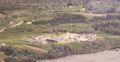
In the summer of 2001, the aging facility shut down. While the buildings remained empty and unused, the property was subsequently rented out to TPB Productions Inc. for the filming of the television show Trailer Park Boys in 2003, and some Trailer Park Boys feature films. In November of 2010, vandals set fire to the sites chapel forcing TPB Productions to vacate the site, and the Capital District Health Authority to begin demolition in early 2011.
Today, a dog park and walking trail remains on the site where the former County Home houses were. A graveyard also remains on the parks property with the sites of former residents and patients.
Images
-
-
 Main Building
 -
-

-
-
-